
Introduction: This article explains what the October 2026 digital waste tracking changes mean for businesses in England and Wales, and how they will reshape the way IT disposals are recorded when laptops, servers, and monitors leave site. You'll learn who should own the process, how to register with the DEFRA portal, what records matter most, how to avoid £300+ fixed penalty notices, and how it all connects to the wider Digital Product Passport trend.
It means your business will need a digital record of waste movements, not just a pickup booking and a file of loose paperwork. For IT assets, that covers the path from your site to the next authorised handler and, in many cases, through to receipt.
That sounds simple, but the effect is wider than many firms expect. A monitor clear-out, a server room refresh, or a batch of broken laptops is no longer just a facilities task. It becomes a compliance process with named parties, dates, item descriptions, and a clear handover trail.
According to the GOV.UK digital waste tracking service, the UK is moving waste record keeping onto a digital service so waste movements can be recorded and shared more clearly. For businesses, that means fewer excuses for vague descriptions, missing transfer notes, or hard-to-find records after a collection has happened.
The practical point is this: if your office, warehouse, school, clinic, or factory disposes of electronic equipment, digital tracking is no longer just someone else’s problem. It sits right inside daily operations.
Most discarded electrical and electronic equipment counts. If it has a plug, battery, cable, circuit board, or screen, pause before sending it out the door.
If someone on your team still asks what is e-waste, the simplest answer is old, broken, or surplus electrical and electronic equipment that has reached the end of its useful life for your business. Once it leaves your site, it enters the e-waste recycling chain — and from October 2026, that journey will need to be backed by a clean digital record.
Common e-waste examples in offices and sites include monitors, laptops, desktops, servers, networking gear, phones, printers, scanners, docking stations, keyboards, cables, and power supplies. In many workplaces, e-waste builds up quietly in cupboards, comms rooms, and under desks until a move, audit, or upgrade brings it into view.
Because it affects day-to-day disposal work, not just annual environmental reporting. It reaches the people who approve collections, move assets, and sign off site records.
WEEE rules often feel distant to finance teams and office managers unless they work directly in procurement or environmental reporting. Digital waste tracking is different. It touches the real moment when equipment leaves your premises. That makes it relevant to facilities managers, IT leads, operations staff, reception teams, and finance directors who need clean records and cost control.
It also changes risk. A missing digital record is easier for a regulator to spot than a dusty folder in a cabinet. If your branches arrange collections separately, or if one department clears equipment without telling another, the gap shows up fast.
One person should lead it, but several teams usually feed the record. Shared responsibility works only when one owner is clearly named.
In smaller firms, that owner may sit in facilities or office management. In larger organisations, the lead may come from compliance, estates, or central operations. IT should support the asset list and data handling. Finance often needs visibility because poor disposal records can create unnecessary cost, internal audit issues, and avoidable penalties.
| Team | Main role | What they should have ready |
|---|---|---|
| IT | Identify devices leaving service | Asset lists, serial numbers where used, data wiping status |
| Facilities or Estates | Arrange site access and collection | Pickup point, dates, contacts, storage area details |
| Finance | Check approvals and record quality | Internal approval route, cost code, audit trail |
| Compliance or HSE | Oversee legal record keeping | Policy, record retention plan, escalation route |
| Site Managers | Confirm what leaves site | Counts, photos if needed, signed handover details |
Start early and treat registration as a short setup project, not a job for collection day. The portal works better when your sites, users, and waste partners are already mapped out.
For many businesses, the registration work is less about technology and more about housekeeping. You need the right legal entity, the right sites, the right contacts, and a clear plan for who enters and confirms records.
A short prep list saves time and prevents bad data. Most registration delays come from missing site details and unclear responsibilities, not from the portal itself.
It also helps to standardise how equipment is prepared before pickup. This guide on how to prepare your e-waste for recycling gives a useful starting point for sorting devices, removing obvious confusion, and making handover day smoother.
The most useful records connect three things: what left, who took it, and where it went next. If any one of those is weak, the whole chain becomes harder to defend.
For ordinary office clear-outs, your team should be able to show the collection date, the site, the carrier, a plain description of the waste, and the receiving party. For business IT assets, it often makes sense to go further and keep an asset schedule, especially for laptops, desktops, and servers that may still sit on your asset register.
A strong digital record often includes:
This matters for more than legal comfort. Clean records help with insurance questions, internal audit checks, fixed asset write-offs, and sustainability reporting. They also reduce the common argument between departments after a collection: “What exactly left the building?”
Build a repeatable process now. Most penalties come from basic failures such as missing records, late action, or confusion over who was meant to record the movement.
A fixed penalty of £300 or more is rarely caused by one dramatic mistake. More often, it grows out of rushed jobs, old habits, and split ownership. A branch clears equipment in a hurry. IT sends a list after the collection. Facilities assumes the carrier recorded everything. Finance hears about it only when a question appears later.
The safer approach is boring, and that is the point. Use one workflow for every site. Use one record format for each type of collection. Make sure someone checks the handover before the vehicle leaves.
The biggest problems are vague descriptions, missing owners, and records created too late. Businesses usually know what they meant to do, but they cannot show it clearly.
| Common mistake | Why it causes trouble | Safer response |
|---|---|---|
| Collection booked at short notice | No time to create or check the digital record | Set a minimum notice period for site teams |
| Asset list sent after pickup | The record may not match the actual load | Approve the list before handover |
| No named process owner | Tasks get missed between IT and facilities | Assign one lead per site or business unit |
| Vague waste descriptions | Weak audit trail and harder dispute handling | Use standard descriptions for common device groups |
| No final receipt check | Open records stay unresolved | Review completion after every collection |
Because experienced waste handlers work with movement records every day. They can often guide the process, check the information needed, and help keep the handover clean and consistent.
That does not remove the producer’s legal duty, but it does reduce friction. A good carrier helps you avoid loose ends. They will usually know what details are needed before pickup, how the load should be described, and what proof of receipt your team should expect back.
This is especially helpful when your business has several sites or mixed loads. Internal teams may only arrange a few electronics clear-outs each year. A carrier or recycler handles them all the time. That experience matters when the rules become digital and more visible.
It is also why disposal should be treated as part of wider governance, not just a van booking. Blancomet’s article on corporate responsibility in e-waste management makes that point well: electronic waste handling now sits close to risk, reporting, and reputation.
Both point toward the same broader shift: more digital information will follow products throughout their life cycle. Waste tracking covers the end-of-life movement, while product passports focus on product data earlier in that journey.
According to the European Commission Ecodesign Regulation FAQs, Digital Product Passports are part of a wider plan to make key product information easier to access and use. That is not the same as UK digital waste tracking, but the direction is similar. Both systems reward businesses that keep better records on what assets they bought, where they are, how long they were used, and what happened when they left service.
That matters for UK businesses even if their first concern is the October 2026 deadline. If you improve disposal records now, you also build habits that help with future product data demands, especially in supply chains with cross-border activity, refurbishment goals, or stronger sustainability reporting.
Keep one clean record from purchase to disposal wherever you can. The fewer broken links between asset register, user history, wipe status, and waste movement, the easier future reporting becomes.
In practical terms, that means linking your fixed asset process, disposal approvals, and collection paperwork. You do not need a huge new system on day one. You do need one source of truth for each batch of devices leaving site.
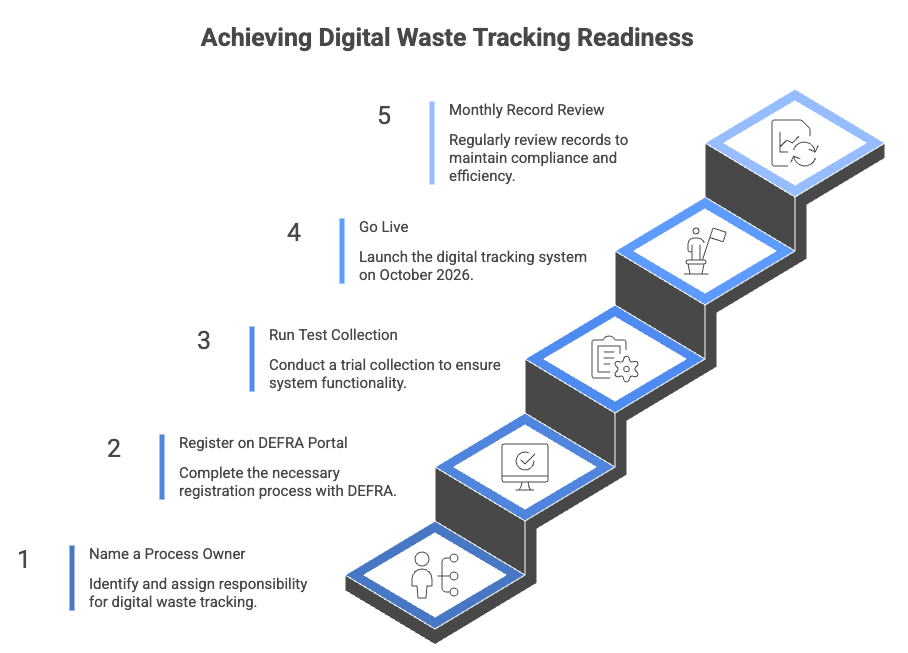
Set the process now, test it once, and train the people who will use it. Waiting for the first urgent clear-out is the expensive way to learn.
Wipe data, separate assets clearly, and make sure the list matches the physical load. Good preparation prevents most handover disputes.
For laptops and desktops, check whether chargers, docks, and peripherals should be listed together or separately. For monitors, count units and note screen type if helpful. For servers and network gear, tie each item to the asset register where possible. If a batch is for reuse, resale, or data destruction review, keep that separate from damaged scrap.
Teams often think the hard part is finding a recycler. In reality, the harder part is keeping the paperwork and asset trail straight while several departments touch the same load.
Digital waste tracking is not just another environmental headline. For businesses in England and Wales, it is an operational change that affects how IT assets leave site, how records are created, and how compliance is proved. Start early, register properly, name an owner, and standardise the record trail for every collection. If you are reviewing providers and searching for e-waste recycling near me, ask one simple question: who will make sure the digital tracking burden is handled cleanly from pickup through confirmation? That is where a capable service partner earns its place.
1. Who is legally responsible for the digital record — the business or the waste carrier?
Both, but in different ways. As the waste producer, your business holds the duty of care under the Environmental Protection Act 1990, which means you must make sure the waste reaches a properly authorised destination. The carrier and receiving site are responsible for entering the actual movement details into the DEFRA digital waste tracking system from October 2026. In practice, this means even if your carrier handles the digital entry, your business is still accountable if the records are missing, inaccurate, or untraceable. Always ask for copies of every digital tracking record for your own audit file.
2. Does a data destruction certificate count as a digital waste tracking record?
No. These are two separate documents that serve different purposes. A data destruction certificate proves that the information on your laptops, servers, or drives has been securely wiped or physically destroyed — it satisfies UK GDPR and ISO 27001 requirements. A digital waste tracking record, on the other hand, proves that the physical equipment moved legally from your site to a permitted receiver. You need both for IT disposals: one for data compliance, one for waste compliance. Filing them together makes audits easier.
3. Does digital waste tracking apply to businesses in Scotland and Northern Ireland?
Partly, and the timeline differs by nation. The Digital Waste Tracking (England) Regulations 2026 come into force on 1 October 2026 in England, Wales, and Northern Ireland. Scotland follows in January 2027. However, if your business operates in Scotland but transfers waste into England, the English rules apply to that movement. Multi-site businesses should map out which sites send waste to which receivers and check the deadline that applies to each route, rather than assuming one rule covers the whole UK.
4. How long do I need to keep digital waste tracking records?
The current duty of care under UK waste law requires records to be kept for at least three years for non-hazardous waste and three years for hazardous waste consignment notes. Once digital tracking goes live, the central DEFRA system will store movement data, but your business should still keep its own copies for internal audit, insurance, and ESG reporting purposes. A practical rule for IT disposals is to retain the digital tracking record, the data destruction certificate, and the asset list together for at least six years to align with most corporate retention policies.
5. What should I ask my IT disposal provider before October 2026?
Five direct questions will tell you whether a provider is ready or a compliance risk. First, are you registered on the DEFRA digital waste tracking service? Second, do you hold a current upper-tier waste carrier licence from the Environment Agency? Third, will you issue a digital tracking record for every collection from our site? Fourth, are your downstream recyclers and receiving sites also registered and permitted? Fifth, how will we access digital records for audit purposes? A capable provider will answer all five clearly and back it up with documentation. Vague answers this close to the deadline are a red flag.

5 Rosemount Park Drive
Rosemount Business Park, Ballycoolin Dublin, D11 FVH2, Ireland