
Non-ferrous metals are metals that contain no iron and are not magnetic. They resist corrosion and are lighter than ferrous metals, which makes them valuable across construction, plumbing, electrical, and manufacturing work. Because they can be recycled again and again without losing quality, they sit at the heart of the scrap metal recycling market.
The most common non-ferrous metals you will come across are:
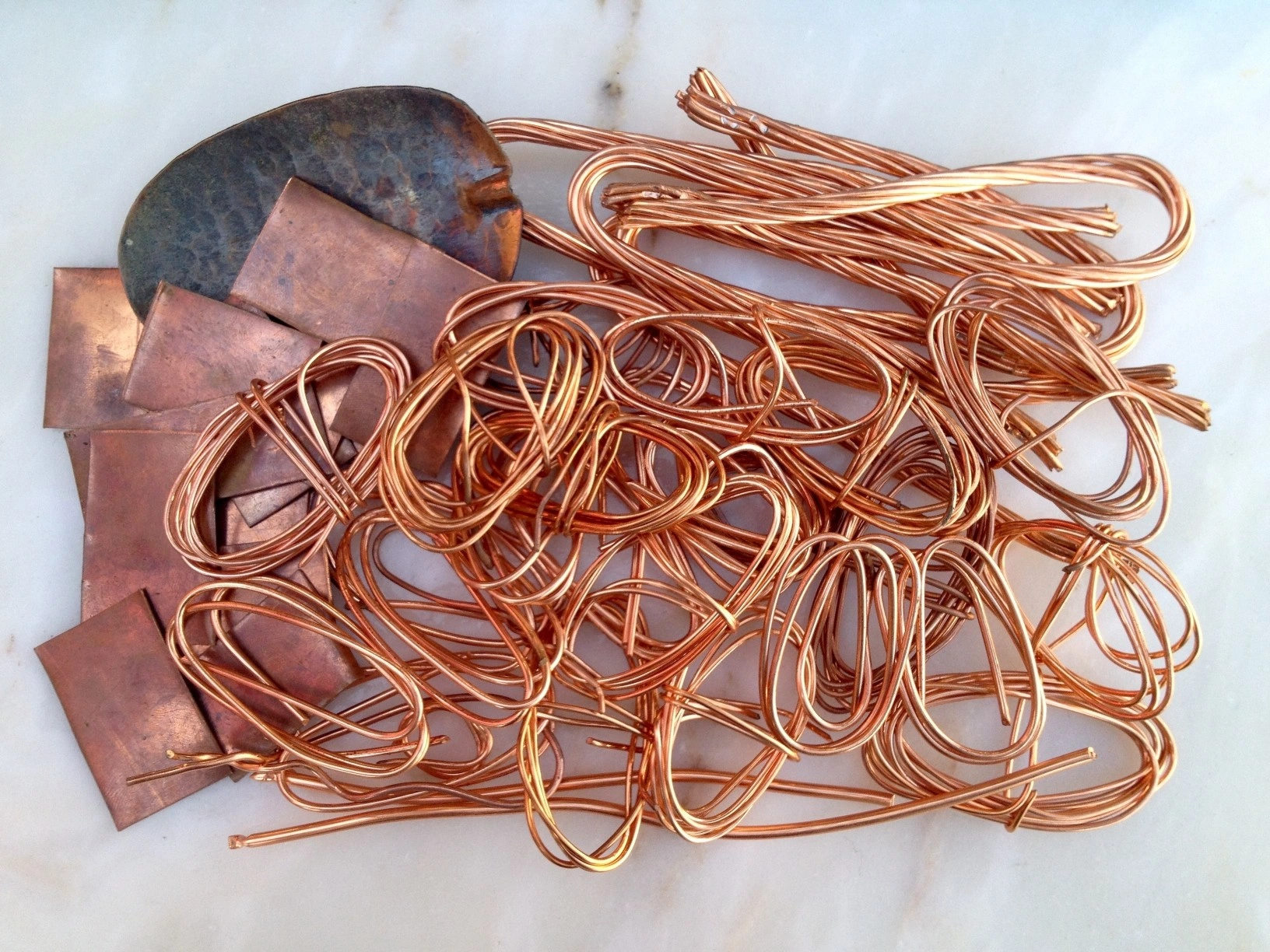
Copper is the headline non-ferrous metal, but it arrives at the yard in very different grades, and the grade decides the price. Each type has its own characteristics and recycling challenges, which is why expert handling matters. The main types of copper scrap range from clean bright copper down to oily and burnt grades. The table below sets out the main types Blancomet handles.
| Type | What it is | Recycling note |
|---|---|---|
| Oily copper | Copper coated with oil or lubricants, often from industry | Oil must be removed; it clings to the copper and lowers the grade |
| Greasy copper | Copper contaminated with grease | Grease is cleaned off before melting, as it interferes with the process |
| Burnt copper wires | Residue from electrical fires or burnt-out motors | Burnt insulation is removed before the copper can be reused |
| Oxy copper | Oxidised copper exposed to the elements, with a greenish hue | Needs treatment to remove oxidation before recycling |
| Bright copper | Untarnished, uncoated copper | The most valuable grade, prized for purity and high recyclability |
| Mixed brass | Copper-zinc alloy from plumbing to instruments | Separated from other metals and contaminants first |
| Scrap brass | More uniform than mixed brass | Easier to recycle thanks to consistent composition |
| Scrap copper pipes | Plumbing pipe, high copper content | Cleaned and stripped of solder and fittings before recycling |
| Scrap copper and cable | Wiring and appliance cable | Highly sought after for conductivity; strip insulation for top grade |
| Scrap roof lead | Lead once used as roofing | Handled carefully to prevent environmental contamination |
Bright copper is clean, uncoated, and untarnished, so it goes straight to the top of the price scale. Oily and greasy copper is the same metal underneath, but the oil or grease has to be removed before it can be processed, which is why it sells for less until it is cleaned. If you can present copper clean and bright, you earn the best rate.
Accurate identification ensures you get the best value. A few simple checks do most of the work.
Colour is the quickest guide: copper is reddish or orange (turning green-grey when oxidised), aluminium is silvery and light, and brass has a yellowish or dull golden tone. Corrosion patterns help too, since copper develops a green patina over time.
Aluminium feels noticeably light for its size, while lead is heavy and soft enough to scratch with a fingernail. The single most useful test is a magnet: non-ferrous metals are not magnetic, so if a fridge magnet does not stick, the piece is almost certainly non-ferrous and worth far more per kg than steel or iron.
Proper sorting protects your return. Keep different metals in separate containers, because mixing them reduces resale value. Remove non-metal attachments like plastic or rubber, and use a magnet to confirm grade and a scale to estimate value. Common sources are easy to spot once you know them: copper in pipes, wiring, and electronics; aluminium in cans, window frames, and bicycle parts; brass in door handles, keys, and musical instruments.
Non-ferrous metals command roughly 3 to 10 times the per-kg rate of ferrous steel, and the UK scrap metal industry is worth over £5 billion a year. The prices below reflect 2026 UK and Ireland yard rates; they track the London Metal Exchange (LME) and vary by grade, volume, and condition. A licensed scrap yard metal near me will weigh and price each grade separately.
| Material | Yard price/kg | Common sources | Notes |
|---|---|---|---|
| Bright copper wire | £4.80 – £6.20 | Electrical rewires, stripped cable | Strip insulation fully for this grade |
| Mixed/stripped copper | £4.20 – £5.50 | Plumbing pipe, mixed wiring | Clean and dry reaches the upper end |
| Insulated cable | £1.20 – £2.80 | Armoured cable, flex, twin and earth | Varies by copper content inside |
| Aluminium sheet/extrusion | £0.60 – £1.10 | Guttering, window frames, offcuts | Keep separate from steel and plastic |
| Brass (fittings, taps, rod) | £2.20 – £3.80 | Old plumbing fittings, valves | Remove iron/steel fittings first |
| Lead (flashing, pipes) | £0.90 – £1.30 | Roof flashing, old supply pipes | High density, small volumes weigh well |
| Alloy wheels (clean) | £0.30 – £0.55 | Garages, tyre centres | Remove tyres and centre caps |
| Lead-acid batteries | £0.15 – £0.35 | Car batteries, UPS units | Must be undamaged and unspilled |
Prices are illustrative 2026 ranges and move with daily LME rates.
Copper is one of the most versatile non-ferrous metals, running through the wires that power your home and the circuits inside your phone. It is also a finite resource, but its recyclability means it never truly goes to waste. Recycling copper saves up to 85% of the energy needed for primary production, and every tonne of recycled copper keeps around 40 tonnes of ore from being mined, according to the US EPA.
The journey is straightforward. Once collected, copper is sorted and cleaned to remove impurities, then melted and purified, often reaching a quality nearly identical to newly mined metal. That recycled copper is shaped into new wire, pipe, and electronic components. A piece of old wiring today can become part of a new gadget tomorrow, which is the circular economy in action. The same basic route applies across non-ferrous scrap: sort, shred, melt, purify, and reform into raw material for new products.
Recycling is the most common and valuable use, but it is not the only one. Collected scrap metal can serve several purposes when it is processed correctly.
Most people walk past it daily: old copper pipe under the sink, a bag of stripped wire from a rewire, corroded alloy wheels in the garage. To anyone who knows current rates, that is money. A typical home renovation generates £70 to £250 in scrap value, and a working electrician can earn an extra £1,500 to £4,000 a year from cable offcuts alone. The table below shows realistic monthly figures by seller type.
| Seller type | Scrap per month | Estimated monthly income | Top materials |
|---|---|---|---|
| DIY homeowner (active renovation) | 5 – 15 kg | £25 – £90 | Copper pipe, brass fittings, aluminium |
| Electrician (sole trader) | 10 – 30 kg | £50 – £180 | Stripped copper wire, cable offcuts |
| Plumber (sole trader) | 8 – 20 kg | £40 – £125 | Copper pipe, brass valves, lead flashing |
| Garage / tyre centre | 80 – 200 kg | £90 – £450 | Alloy wheels, batteries, copper brake line |
| Small factory / workshop | 50 – 300 kg | £80 – £600 | Aluminium offcuts, copper busbar, brass swarf |
Every rewire and consumer-unit replacement produces cable offcuts and stripped wire. Understanding grades is where the real difference lies, since the gap between mixed cable and bright copper wire can be £2 to £3 per kg. The different types of copper wire scrap, from stripped bright wire to low-grade data cable, each carry a different rate.
| Cable type | Copper content | Yard price/kg | Preparation tip |
|---|---|---|---|
| Bright copper wire (stripped) | 99%+ | £4.80 – £6.20 | Strip all insulation cleanly for top grade |
| Twin and earth (stripped) | ~65% | £3.00 – £4.20 | Strip outer and inner sheathing |
| 3-core flex (unstripped) | ~45% | £2.00 – £3.00 | Strip if the volume justifies it |
| Armoured cable (SWA) | ~25-35% | £1.20 – £2.00 | Steel armour lowers copper percentage |
| Telecom / data cable | ~10-15% | £0.50 – £1.00 | Low copper, valuable in volume only |
A simple habit helps everyone: keep a crate or separate bay for non-ferrous metals, add to it as you go, and book a scrap metal collection near me when it is full. Sorting properly before you sell is the single highest-impact step, often worth an extra 15 to 30% at virtually no cost. If you store scrap outside between collections, review Blancomet’s guidance on how to protect your scrap from metal theft in 2026.
Copper on the London Metal Exchange has traded at roughly £7,200 to £9,400 per tonne in 2026, near multi-year highs, so even small quantities of pipe, wire, or cable are worth more than they have been in years. The reason is structural rather than temporary. Renewable energy is copper-hungry: solar installations use around 5 tonnes of copper per MW of capacity, offshore wind turbines use 8 to 15 tonnes each, and electric vehicles carry roughly four times the copper wiring of a combustion car. That supply-demand gap is expected to persist well into the 2030s, as explored in Blancomet’s guide on the role of non-ferrous metals in renewable energy technologies. Aluminium follows a similar path, and since recycled aluminium uses about 95% less energy than primary production, manufacturers actively seek quality scrap.
Selling scrap is straightforward, but it is regulated to keep the trade honest. In the UK, buyers must be licensed under the Scrap Metal Dealers Act 2013, and payment must be cashless and traceable, which protects sellers and creates a clear paper trail. In Ireland, confirm your buyer holds the appropriate EPA waste facility permit and always ask for a receipt so the transaction is fully traceable. Working with a licensed recycler is the simplest way to stay compliant.
Recycling scrap metal well is a complex process, especially across the many grades of copper and brass. A professional recycler ensures each type is treated correctly, maximising value while minimising environmental impact. Blancomet operates depots in St Albans, Leeds, Dunfermline, Gateshead, and Dublin, with competitive per-kg pricing that tracks the LME, trade collection accounts, and same-day payment options. Searching for copper recycling near me? Blancomet’s depots make drop-off and collection simple across the UK and Ireland. Whether you are clearing a loft, finishing a rewire, or running a tyre centre, there is a clear path from scrap to your bank account. Explore our non-ferrous scrap metal recycling service or contact your nearest UK or Ireland depot for a quote.
Understanding scrap metal types, from oily copper to bright copper, brass, and lead, is the key to recycling well and getting paid fairly. Identify with a magnet and a glance at colour, sort and clean before you sell, and you turn what looks like junk into real value. With copper near multi-year highs in 2026 and recycling saving huge amounts of energy, there has rarely been a better time to give non-ferrous metal a second life through a licensed, professional recycler.
Non-ferrous metals contain no iron and are not magnetic. Common examples are copper, aluminium, brass, lead, and zinc. They resist corrosion, are lighter than steel, and are worth more per kg, which makes them valuable to recycle.
Hold a magnet to it. If the magnet does not stick, the metal is almost certainly non-ferrous. Colour helps too: copper is reddish, aluminium is light and silvery, and brass is dull gold.
They are the same metal, but bright copper is clean, uncoated, and untarnished, so it sells at the top grade. Oily or greasy copper is coated and must be cleaned before processing, so it pays less until it is cleaned up.
What is bright wire? Bright wire is clean, bare copper wire with all insulation removed and no tarnish or coating. It is the same as bright copper wire and sits at the top of the price scale, paying the highest per-kg rate of any common copper scrap grade.
At 2026 UK rates, bright copper wire has paid around £4.80 to £6.20 per kg, with mixed or stripped copper a little lower. Exact prices track the London Metal Exchange and depend on grade, volume, and condition.
Stripping cable to bright copper achieves the top grade and the best price. Sorting and cleaning before you sell can add roughly 15 to 30% to your payout, so it is usually worth the effort for any real volume.
Yes. UK scrap buyers must be licensed under the Scrap Metal Dealers Act 2013, and payment must be cashless and traceable. In Ireland, buyers should hold the appropriate EPA waste facility permit. Always ask for a receipt.

5 Rosemount Park Drive
Rosemount Business Park, Ballycoolin Dublin, D11 FVH2, Ireland